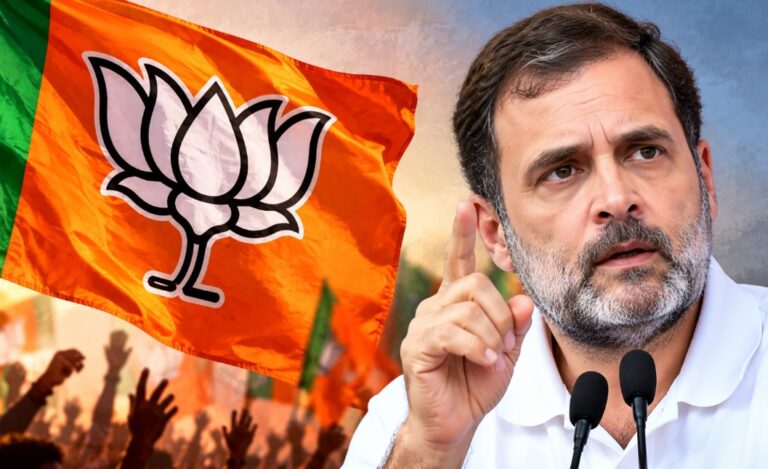
Bengaluru: The Congress has launched the ‘Sanghatan Srujan-2’ campaign in Bengaluru South district to strengthen its organisational structure at the grassroots level ahead of the 2028 Karnataka Assembly elections.
Rajkumar, former president of the Bengaluru South District Congress, said the campaign was being conducted in accordance with the directives of the All India Congress Committee (AICC) to identify committed party workers and entrust them with organisational responsibilities.
Speaking at a press conference at the Karnataka Pradesh Congress Committee (KPCC) office, he said the original Sanghatan Srujan campaign was launched in Karnataka on July 24 to provide opportunities to new leaders emerging from among party workers and replace long-serving district and taluk-level presidents. The initiative has already resulted in organisational changes in several areas, he added.
In Bengaluru South, former MLA Poornima, Srinivasulu and Rajkumar have been entrusted with responsibilities for the second phase.
The campaign will cover 17 Block Congress committees and six Assembly constituencies in the district. Applications will be invited from interested candidates seeking to become Block Congress presidents.
Rajkumar said the AICC had directed that women be given opportunities to serve as district and block presidents. Women need not be members of the Women’s Congress alone to apply for other organisational positions, he said, adding that women’s representation in committees had been made mandatory.
The campaign will also involve restructuring ward committees, assigning fresh responsibilities to existing block committee members and collecting information through ‘Bill A-2’ applications.
Former MLA Poornima said the objective was to strengthen the party from the grassroots and prepare it for the 2028 Assembly elections.
She said meetings would be held with block-level workers without the influence of district presidents to ensure that committed workers received opportunities.
The selection process would consider the Congress’s previous vote share in each block, its present support base and local political conditions. Block presidents must understand ground realities, engage closely with people and build the organisation in their respective areas, she said.
About the Author