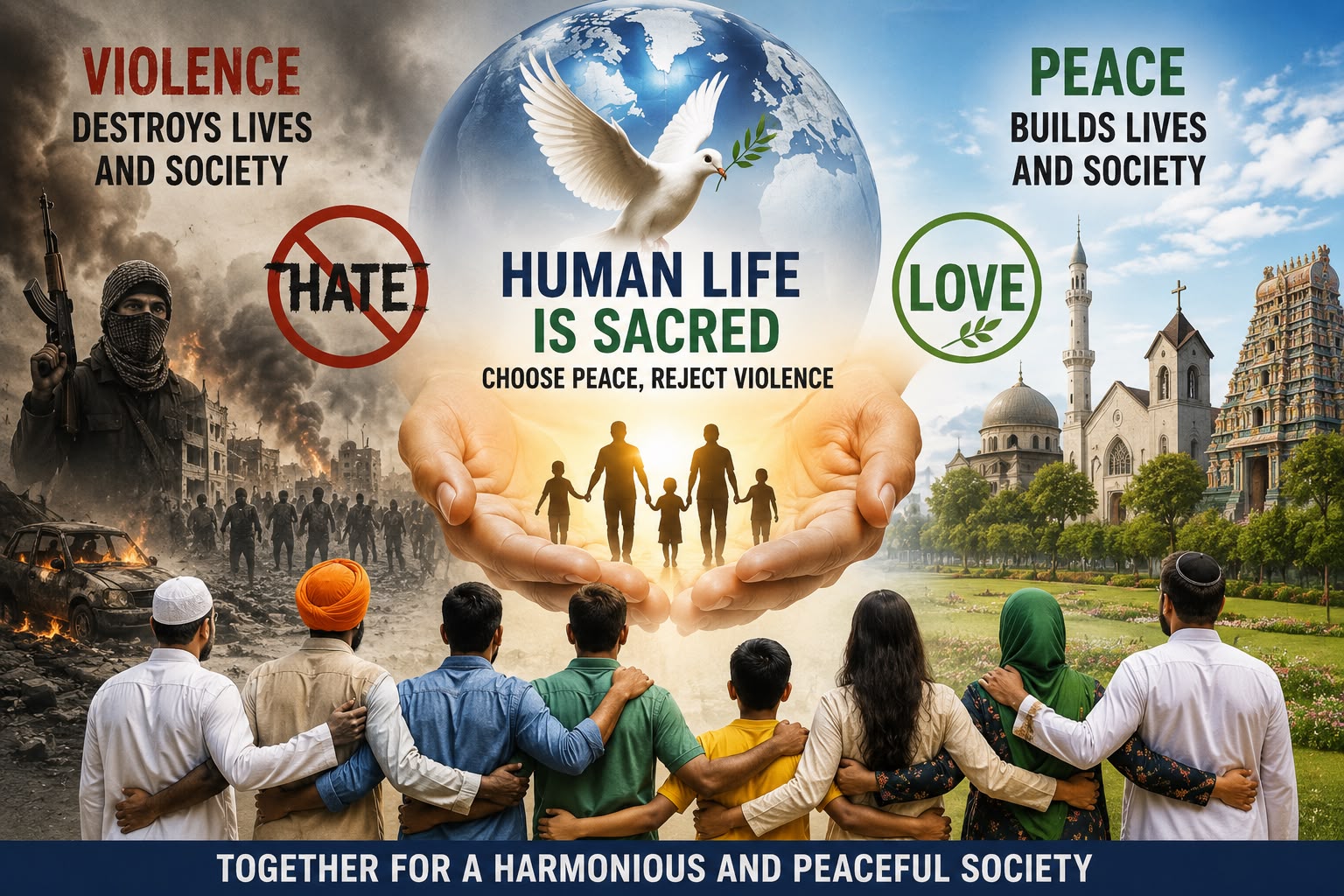
The growing incidence of terrorism, communal violence, mob attacks, and ideologically motivated crimes poses a serious challenge to human values and social harmony. If violence continues to be answered with more violence or ignored altogether, it risks creating a cycle of fear and instability that threatens the foundations of civilized society.
The recent knife attack in Mumbai’s Naya Nagar, in which security guards were allegedly targeted after being questioned about their religion, is not merely a criminal act but a reflection of rising intolerance, radicalisation, and moral decline. Such incidents must be examined not only from legal and security perspectives but also through psychological, social, ethical, and religious lenses.
Islam regards human life as sacred. The Holy Qur’an declares that killing one innocent person is equivalent to killing all humanity, while also affirming that there is no compulsion in religion. Violence against innocent people, terrorism, and the misuse of religion to justify hatred have no place in Islamic teachings. Leading Islamic scholars consistently maintain that those who promote violence in the name of religion violate its fundamental principles of peace, justice, mercy, and human dignity.
The spread of extremist ideologies, online hate propaganda, social alienation, psychological distress, and declining moral awareness can contribute to radicalisation. Such acts not only endanger public safety but also deepen mistrust between communities and unfairly tarnish the image of entire religious groups because of the actions of a few individuals.
Addressing this challenge requires a collective response from governments, religious leaders, educational institutions, families, and civil society. Promoting constitutional values, interfaith harmony, digital awareness, mental health support, and authentic moral education is essential to prevent violence and strengthen social cohesion.
A peaceful and secure society can only be built when respect for human life, tolerance, justice, and mutual coexistence become shared values across all communities.
— Altaf Mir, Ph.D., Jamia Millia Islamia
About the Author