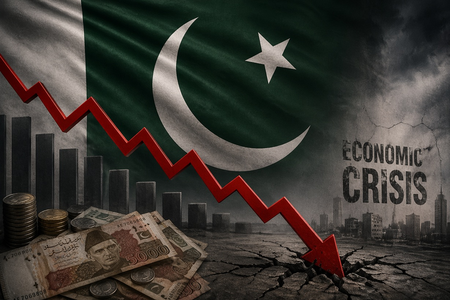
New Delhi, Oct 8 (IANS) Pakistan’s electricity crisis deepened as the country’s overall power shortfall crossed 4,000 megawatts, forcing distribution companies to step up load‑shedding and leaving consumers facing prolonged outages, a report has said.
The report from Bangladesh-based Daily Sun cited several generation units remaining offline and hydropower production declined in Pakistan.
Consumers in urban and rural areas are enduring three to four hours of scheduled power cuts, with outages lengthening suddenly in some localities, the report cited ARY News.
The situation is acute in Lahore, where demand has climbed to about 4,000 MW while available supply is roughly 3,000 MW, the report said, adding that diesel shortages following gas disruptions have compounded the city’s energy woes.
The huge supply-demand gap weighed on the already strained power distribution system, while the latest crisis raised questions over repeated government claims that Pakistan’s electricity shortages had been brought under control, the report noted.
Lahore is also reportedly experiencing diesel shortage following disruptions in gas availability, further complicating the city’s energy situation, sources added.
The National Electric Power Regulatory Authority (NEPRA) has taken action against K-Electric (KE) as it imposed load-shedding on feeders based on aggregate technical and commercial (ATC) losses.
Such load-shedding is illegal, NEPRA said, and directed K-Electric to immediately stop unannounced power outages.
“The regulator maintained that consumers who regularly pay their electricity bills should not have their supply suspended simply because they are connected to feeders with high losses,” the report noted.
NEPRA stressed that consumers who pay fees timely must not be penalised for electricity theft or other failures committed by other users and instead take targeted action against individual consumers involved in electricity theft.
Pakistan has been given a list of additional conditions by the International Monetary Fund among which the “most troubling demand” is commitment to raise electricity and gas prices, another recent report said.
—IANS
aar/ag
About the Author