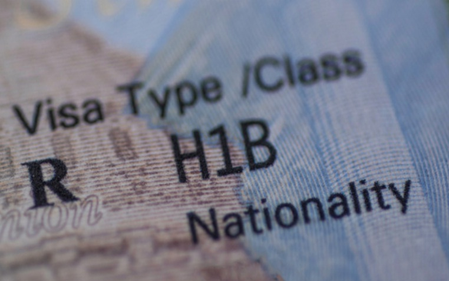
Washington, Nov 11 (IANS) A Trump administration proposal to eliminate the 60-day grace period that allows laid-off H-1B visa holders to find new jobs in the United States has drawn more than 31,000 public comments, as the deadline for submissions approached.
The proposal, which could have major consequences for Indian professionals working in America, had received 31,383 posted comments by Tuesday night (local time).
The number had risen from about 27,000 on November 2 to 30,382 early Tuesday, reflecting growing public engagement with one of the administration’s latest immigration proposals.
The Department of Homeland Security (DHS) published the proposed rule on September 11. It seeks to remove a regulation allowing certain foreign workers up to 60 days after losing their jobs to secure new employment, change immigration status or prepare to leave the country.
The provision covers H-1B workers and several other temporary visa categories, including L-1, O-1 and TN. Their dependants are also covered.
Under existing rules, eligible workers can remain for up to 60 days after employment ends, or until their authorised stay expires, whichever comes first.
If the proposal takes effect, workers who lose their jobs would no longer receive this discretionary protection. They would generally have to leave the United States unless otherwise authorised to remain.
DHS argues that immigration status should remain directly linked to the employment for which a foreign worker was admitted.
The department said the existing grace period “is not mandated by statute” and creates additional administrative work.
According to DHS, immigration officials had to consider whether the provision applied in more than 1.9 million petitions and applications between October 2017 and May 2026.
Using revoked employment petitions as a measure, the department estimated that an average of 65,752 foreign workers annually lost or changed jobs between fiscal 2021 and 2025.
Of those, about 3,795 had new employer petitions filed within the grace period each year.
DHS acknowledged that eliminating the provision could cause some workers to lose income, incur relocation expenses or face immigration proceedings.
The proposal carries particular significance for Indians, who account for the largest share of H-1B beneficiaries.
According to USCIS figures cited in its fiscal 2025 report to Congress, about 70 per cent of 406,348 approved H-1B petitions involved beneficiaries born in India. China accounted for approximately 12 per cent.
The grace-period proposal has attracted more posted comments than two other pending DHS measures affecting international students and skilled foreign workers.
A separate proposal to charge institutions $70,000 for initial Optional Practical Training and $30,000 for subsequent training had received 8,947 posted comments by Tuesday night. Its comment period ended on Monday.
Another proposal would remove the practice of generally deferring to previous USCIS approvals when reviewing extension applications involving unchanged circumstances. That measure had received 686 posted comments. Its deadline is November 13.
The volume of comments does not by itself establish how many respondents support or oppose the proposals.
DHS must review the submissions before deciding whether to issue a final rule. Any final regulation would specify when the changes take effect.
The 60-day grace period was established through a 2016 regulation that took effect on January 17, 2017.
The H-1B programme permits American employers to recruit foreign professionals for specialised occupations, particularly in technology, engineering and other skilled fields.
–IANS
lkj/sd/
About the Author