Ahmedabad, Oct 18 (IANS) Gujarat’s 108 Emergency Medical Service has handled more than 1.99 crore emergency cases and helped save over 19.66 lakh lives since its launch in 2007, according to figures released by the state government up to August this year.
The free ambulance service, launched on August 29, 2007, by Prime Minister Narendra Modi when he was state Chief Minister, has completed 19 years and entered its 20th year.
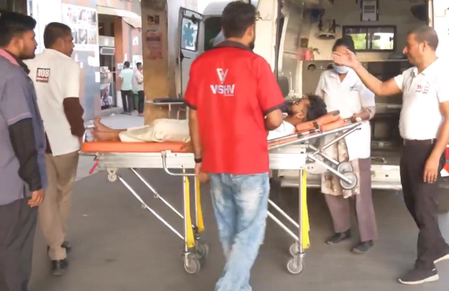
It provides emergency transportation and pre-hospital care to patients, including those involved in road accidents, suffering heart attacks or experiencing other critical medical conditions.
Of the more than 1.99 crore cases handled during this period, over 1.96 crore were medical emergencies, more than 2.55 lakh were police-related emergencies and over 8,000 involved fire-related incidents, according to the government data.
The service has responded to more than 62.97 lakh pregnancy and maternity-related emergencies, over 24.18 lakh road accident cases, more than 11.77 lakh serious respiratory cases and over 9.87 lakh heart attack cases.
Patients in these cases received pre-hospital care, with ambulances transporting them to hospitals during the critical period commonly known as the golden hour.
The ambulance fleet has travelled more than 62 crore kilometres over the 19 years, the figures showed.
Jaswant Prajapati, chief operating officer of GVR EMRI in Ahmedabad, said the service currently operates around 800 road ambulances, 38 intensive care units on wheels, two boat ambulances and one air ambulance across Gujarat.
“To ensure that patients receive fully integrated patient transport services, we have also integrated ambulances from 586 government health centres with our system. As a result, around 1,500 ambulances are currently operational round the clock under the 108 service,” he said.
An advanced Emergency Response Centre at Naroda-Kathwada in Ahmedabad coordinates the service.
A 108 ambulance is dispatched every 21 seconds on average across the state, while the reported average response time is 13 minutes and nine seconds.
Rajendra Singh Sodha, a driver with the service, attributed timely arrivals to GPS systems and familiarity with local roads. “We try to take shorter routes wherever possible and make every effort to reach patients as quickly as possible while driving carefully,” he said.
Medical technician Shailesh Thakor said ambulances carry equipment to manage critical emergencies, including automated external defibrillators (AEDs), monitors, ventilators and airway-management devices.
“Whenever we receive a call about an accident or any other emergency, our first priority is to do everything possible to save the patient,” he said, adding that staff administer cardiopulmonary resuscitation (CPR) if a patient collapses during transport.
Ashok Sadhu, a beneficiary from Ahmedabad, said the service played a significant role in saving his brother’s life.
Comparing its rapid response to divine assistance, he said: “The ambulance arrived so quickly that it felt as though ‘divine messengers have come to help’.”
The state government says the service now transports an average of 4,780 patients to hospitals every day, providing free emergency assistance across Gujarat.
–IANS
mys/uk
About the Author