Washington, Aug 1 (IANS) Two powerful House committees have launched a fresh investigation into DoorDash’s use of a Chinese-developed artificial intelligence model, raising concerns that the growing adoption of Chinese AI by American companies could pose national security, cybersecurity and economic security risks.
The House Select Committee on China and the House Committee on Homeland Security said on Friday they had written to DoorDash co-founder and Chief Executive Officer Tony Xu seeking detailed information about the company’s evaluation and deployment of artificial intelligence models developed in China.
The move expands a congressional investigation that began in April and has already examined other American companies’ use of Chinese open-weight AI models.
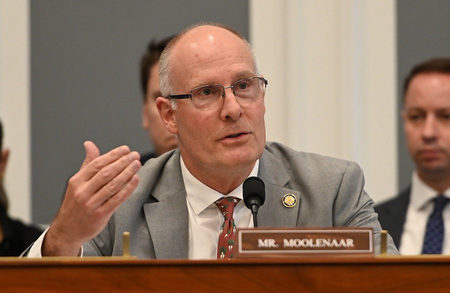
In their letter, House Select Committee on China Chairman John Moolenaar and House Homeland Security Committee Chairman Andrew R. Garbarino acknowledged why American companies may be drawn to such models but argued that the security implications require closer examination.
“[T]he Committees recognize that U.S. companies, from large technology firms to startups, may evaluate and deploy PRC-developed open-weight models because they can provide competitive capabilities, lower costs, greater customization, and alternatives to reliance on a small number of proprietary model providers,” they wrote.
“Those practical considerations do not eliminate the need for risk-based safeguards or diminish the national security concerns associated with growing dependence on models developed by entities subject to PRC jurisdiction,” said the letter.
“An effective federal approach should therefore reduce U.S. companies’ reliance on PRC-developed models by strengthening the availability, security, and competitiveness of American open-weight alternatives, while applying appropriately tailored safeguards in sensitive and high-risk applications. This investigation is intended to establish the factual record necessary to inform that approach,” it said.
According to the committees, the investigation is focused on the national security, cybersecurity and economic security implications of American companies integrating Chinese open-weight AI models into consumer platforms, enterprise software and systems that handle sensitive commercial or personal information.
Unlike proprietary AI systems, open-weight models make their underlying parameters publicly available, allowing developers to download, modify and deploy them independently. The committees said this flexibility can reduce costs and increase customisation but also raises concerns about software integrity, supply chain security and the provenance of the underlying technology.
The congressional letter cites public statements by DoorDash co-founder Andy Fang that the company incorporated open-weight models into an internal AI-assisted code review system. According to the committees, DoorDash said it routed more difficult tasks to a US-developed frontier model while assigning lower-level work to Kimi K2.6, an open-weight model developed by China’s Moonshot AI. The company also stated that the new configuration outperformed an earlier setup while lowering costs.
Lawmakers also referred to public statements by the White House Office of Science and Technology Policy alleging that Moonshot AI operated a covert platform to conduct large-scale distillation against American AI models and trained models using advanced computing systems it was not authorised to obtain.
Chinese open-weight AI models have become increasingly attractive to businesses because they offer lower operating costs, greater flexibility and the ability to run on a company’s own computing infrastructure rather than through proprietary cloud services. At the same time, policymakers in Washington have intensified scrutiny of Chinese AI developers amid broader strategic competition with Beijing over advanced technologies.
–IANS
lkj/rs
About the Author