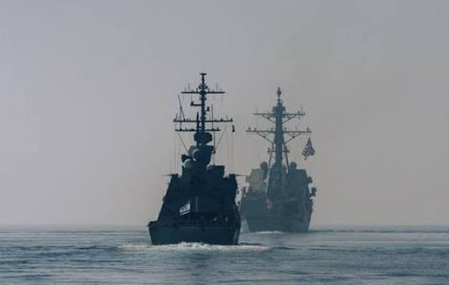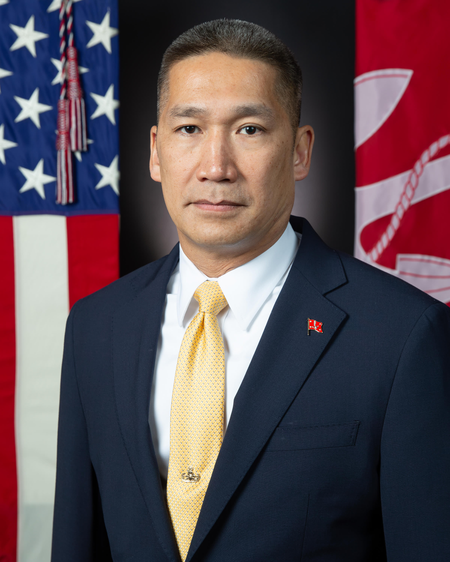
Washington, Nov 18 (IANS) Acting US Navy Secretary Hung Cao has acknowledged that the war with Iran was straining naval resources, as senators questioned whether prolonged deployments, depleted munitions and delayed maintenance were weakening US readiness to confront China in the Indo-Pacific.
“Senator, it is stressing our naval resources,” Cao told Senator Mazie Hirono during his Senate Armed Services Committee confirmation hearing on Tuesday (local time) to become the Navy’s permanent secretary.
But Cao defended the military campaign, arguing that the combined performance of American forces had demonstrated capabilities that would give China pause.
Hirono, a Democrat from Hawaii, challenged that assessment. She said the concentration of naval forces in the Middle East was diverting ships and attention from the Indo-Pacific, where the United States faces challenges from China and North Korea.
Hirono said the conflict had consumed tens of billions of dollars, drawn down critical munitions, delayed maintenance and forced sailors and their families to endure extended deployments.
She also questioned whether an emphasis on building more ships was being matched by investment in the shipyards needed to maintain them. Longer deployments, she argued, compounded the maintenance burden when vessels returned.
Cao praised shipyard workers in Hawaii and said some had been temporarily assigned to other yards to help address workforce shortages.
He acknowledged the strain on the Navy but argued that the coordinated use of American naval, ground, air and cyber capabilities had unsettled China.
Hirono rejected that interpretation, saying Beijing remained active in the Indo-Pacific as Washington concentrated on the Middle East.
Cao responded that comparisons of ships and aircraft did not capture the strength of the US enlisted force. He pointed to the responsibilities entrusted to young American sailors, including operating aircraft carriers and launching aircraft.
Asked whether he had raised the war’s impact on readiness with President Donald Trump and the defence secretary, Cao said he had laid out the Navy’s requirements and provided options, mitigation plans and fallback arrangements.
Senator Mark Kelly, an Arizona Democrat and former naval aviator, separately pressed Cao about the welfare of sailors and Marines on extended Middle East deployments.
Kelly cited eight suicide attempts across the USS Abraham Lincoln carrier strike group during a deployment he said lasted 321 days. He also relayed complaints from families about inadequate food, weight loss and shortages of basic hygiene supplies on deployed vessels.
Those accounts were presented by Kelly; Cao maintained that food supplies were adequate.
Cao said he reviewed shipboard conditions and remaining rations daily. He identified the destroyer USS Gonzalez as a particular concern because it had about a week’s supplies remaining, below the two weeks he preferred.
Asked whether ships had run out of supplies, he said they had not.
Kelly challenged Cao over a parent’s report that a service member had lost more than 45 pounds in six months.
“It’s like my kids opening up the refrigerator door and saying there’s nothing to eat in here,” Cao said.
Kelly rejected the comparison, arguing that such weight loss could not be explained simply by dissatisfaction with food choices.
The senator also challenged Cao’s description of the eight suicide attempts as successful interventions. Cao pointed to chaplains, mental health specialists and resilience counsellors aboard ships.
Kelly acknowledged that deaths had been prevented but said the Navy still needed to address the conditions and pressures facing deployed personnel.
–IANS
lkj/sd/
About the Author