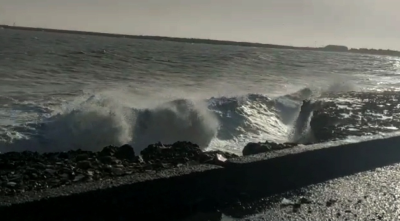
Chennai, Oct 25 (IANS) Authorities have hoisted cyclone warning signal No. 1 at nine ports across Tamil Nadu and Puducherry as a weather system over the Bay of Bengal gathers strength and is expected to develop into a cyclone on Monday, according to officials.
The ports placed under the preliminary warning are Chennai, Ennore, Kattupalli, Cuddalore, Thoothukudi, Pamban, Nagapattinam, Puducherry, and Karaikal.
The signal comes amid strong winds and forecasts of further intensification of the system over the next two days.
According to the India Meteorological Department (IMD), the low-pressure area over the central and adjoining southeast Bay of Bengal intensified into a well-marked low-pressure area on Saturday. It is expected to strengthen into a depression and subsequently a deep depression on Sunday. The system is then likely to develop into a cyclone on Monday while continuing its movement west-northwestwards.
The forecast indicates further intensification as it advances across the Bay of Bengal towards the Andhra Pradesh coast.
The weather system may cross the coast near Andhra Pradesh on the morning of October 28. Its projected movement places the central-west Bay of Bengal along its anticipated course, with the timing and location of the crossing remaining part of the forecast.
The hoisting of signal No. 1 represents an early stage in the port warning system. It indicates the presence of a weather disturbance with conditions favourable for cyclone formation, helping communicate the developing situation to vessels and others using the ports.
Although strong winds may prevail in the vicinity of the weather system, signal No. 1 does not indicate that the port displaying it is expected to be directly affected.
The distinction is significant because the signal conveys a preliminary warning rather than an immediate threat to the harbour. Ports use warning signals numbered from 1 to 11 to communicate different levels of weather-related danger. The numbered signals indicate the nature and severity of the potential threat, allowing information about changing conditions at sea to be conveyed through a recognised visual system.
The method of displaying these warnings changes between day and night. During daylight hours, ports use cone-shaped structures made of bamboo to show the designated signal. After dark, coloured lights communicate the warning.
–IANS
aal/vd
About the Author