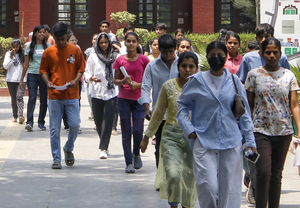
New Delhi, May 30 (IANS) The National Testing Agency (NTA) on Saturday announced revised timings for the Common University Entrance Test for admission to undergraduate courses (CUET-UG) 2026, after a “technical glitch” delayed the examination at some centres on May 30.
In a post on X, the NTA blamed its service provider, Tata Consultancy Services (TCS), for the glitch. “M/s TCS has reported that a technical glitch at their end delayed the commencement of CUET (UG) 2026 at some centres on 30.05.2026,” it said.
However, the NTA stated that the issue has now been resolved.
“The issue has since been resolved, and the exam is being conducted with full compensatory time so that no candidate is disadvantaged.”
Announcing the revised timings of the exams, the NTA posted: “Afternoon session timing (revised): Reporting/entry: from 2:30 p/m.; Examination begins: 4:00 p.m. (instead of 3:00 p.m.).”
It added that the morning-session candidates are being given “the full duration of the paper and may exit only after completing it”.
The NTA said that it sincerely regrets the inconvenience caused to students and parents.
Along with the update, the testing agency has shared its official helpline number: +91-11-40759000 and email support for candidates facing any issues.
According to the Ministry of Education’s website, the Common University Entrance Test (CUET) provides a common platform and equal opportunities to candidates across the country, especially those from rural and other remote areas, and help establish better connections with the universities.
A single examination enables the candidates to cover a wide outreach and be part of the admissions process to various of Central Universities/ Participating Universities (State/Deemed/Private).
The registration for CUET-UG 2026 began from the first week of April.
In 2025, 13.54 lakh students had registered for CEUT-UG 2025. The exams were held for admission in the first year of college in more than 260 universities across the country, including all Central universities. The exam had 37 subjects, and it was conducted in 13 languages at 300 centres across the country.
–IANS
cg/vd
About the Author