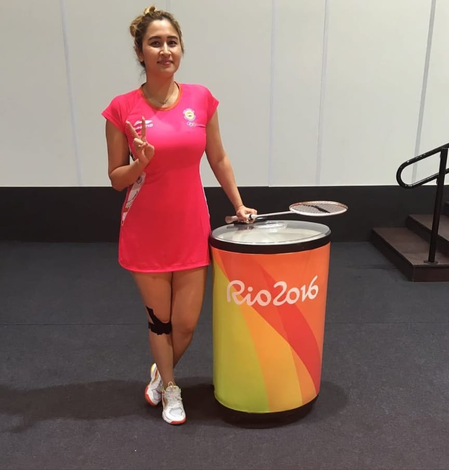
New Delhi, May 21 (IANS) Indian badminton icon Jwala Gutta has sparked an important conversation around maternal and infant healthcare after revealing that she donated nearly 60 litres of breast milk to government hospitals in Hyderabad and Chennai during the first year after childbirth.
Speaking exclusively to IANS, Gutta said the initiative was never part of a grand plan but something she embraced after encouragement from her doctors.
Her revelation, shared on social media, drew widespread appreciation for highlighting the life-saving role of donor breast milk for premature and critically ill newborns in neonatal intensive care units (NICUs).
On X, the Arjuna awardee stressed the importance of donor milk, noting that just “100 ml of donor milk can feed a tiny 1 kg baby for several days,” potentially supporting many vulnerable infants. She explained that donor milk acts as a critical bridge for babies whose mothers are unable to breastfeed due to medical conditions, malnutrition, stress or premature delivery.
Breast milk is widely regarded as the gold standard in infant nutrition, especially for preterm babies. Rich in antibodies, enzymes, hormones and essential nutrients, it strengthens immunity, supports gut development and reduces the risk of severe complications such as necrotising enterocolitis.
“I didn’t really plan for this. I honestly didn’t know much about breast milk donation,” two-time Olympian shuttler told IANS. “My gynaecologist and paediatrician encouraged me and explained that many new mothers are unable to produce milk for various medical and nutritional reasons.”
She also pointed to the harsh realities faced by economically weaker families, where limited access to nutritious food and healthcare often affects maternal health.
“Many people live below the poverty line and don’t get proper nutrition, which impacts milk production. There are also a lot more preterm babies nowadays,” she said.
Speaking on broader health concerns, the former shuttler said changing lifestyles, environmental pollution and lack of awareness have worsened maternal and infant health challenges.
“Diet issues, lack of medical assistance, poor awareness, lifestyle changes, adulterated food, polluted air and contaminated water — all of these factors are affecting people,” she added.
The 42-year-old candidly acknowledged her own privilege, saying access to nutritious food, clean water and domestic support made it possible for her to continue donating milk consistently.
“I am privileged, let me say that very clearly. I drink mineral water at home and have always been careful about hygiene since I suffered jaundice early in my badminton career,” she said.
“I realised I was producing more milk than my child needed, so I thought, why not help others? To donate, you have to be disciplined. You need to pump every two to three hours,” she shared.
Asked whether the process was physically exhausting, Gutta admitted it was painful and tiring, but worthwhile because of the impact it could have on vulnerable newborns.
“It is painful and tiring, but I thought if it could help someone, why not? I never thought I was doing something extraordinary. I genuinely believed it was normal,” she said.
Reflecting on the public reaction, she added, “We are living in a time where normal things seem abnormal.”
The former world championships medallist also clarified that she intentionally kept her pregnancy and motherhood private and away from commercial endorsements.
“If you look at my Instagram, even during pregnancy I wasn’t doing brand promotions. Motherhood and pregnancy were personal experiences for me. I wanted to enjoy them for myself, not for public attention,” she said.
According to Gutta, speaking openly about breast milk donation became important after she realised how little awareness existed around the issue despite the rising number of premature births and malnourished mothers.
“I thought if I spoke about it, it would help normalise the conversation. I was surprised people weren’t talking about it more,” she said.
She credited her doctors, including gynaecologist Dr Manjula Nagani, for encouraging awareness around the subject.
“I’m not a superhuman. If I can do it, others who are privileged and capable can do it too. I had the time, support and nutrition needed after delivery. If it can help small children, why not?” she said.
Addressing concerns among mothers that donating milk could affect their own child’s nutrition, Gutta emphasised the importance of medical guidance.
“That’s why doctors are there. You should always consult them. There are ways to increase milk supply. Obviously, no one should compromise their own child’s nutrition, but many mothers produce excess milk that eventually gets discarded,” she said.
“I later learnt that breast milk is called ‘liquid gold’, so why throw away something so valuable? Now that I have a baby, seeing starving children affects me ten times more,” she said.
Concluding with a heartfelt appeal, she reiterated that breast milk donation should be viewed as a normal and compassionate act.
“It is a very normal thing to do. People should talk about it more. I’m just a normal human being — if I can do it, anyone can,” Gutta said.
–IANS
vi/cs/bc
About the Author